Compression Socks
Varicose Veins: Can Compression Socks Help?
If you've noticed twisted, bulging veins on your calves — or your legs feel heavy and achy by the end of the day — you've probably wondered whether compression socks are worth trying. The short, honest answer: compression can make varicose veins feel a lot better, but it doesn't make them go away. Here's what that means in practice.
What are varicose veins?
The veins in your legs carry blood back up to your heart, against gravity. They rely on two things: your calf muscle, which squeezes the veins every time you walk, and small one-way valves inside the veins that stop blood sliding back down.
When those valves weaken, blood can pool in the vein instead of moving on. Over time the vein stretches, widens and twists — and becomes visible under the skin as a varicose vein. Smaller, thread-like versions are often called spider veins.
Varicose veins are very common, and for many people they're mainly a cosmetic concern. For others they come with symptoms worth taking seriously.

What symptoms can varicose veins cause?
People with varicose veins commonly describe:
- Aching, heavy or tired legs, often worse at the end of the day
- Swelling around the ankles
- Throbbing, itching or burning over the veins
- Night-time leg cramps or restlessness
Symptoms usually get worse after long periods of standing or sitting and ease when you put your feet up.
Do compression socks help varicose veins?
Compression socks apply measured, graduated pressure — firmest at the ankle and easing up the calf. That pressure supports the vein walls from the outside and works alongside your calf muscle to help move blood upward instead of letting it pool.
Many people with varicose veins find that wearing compression helps with the symptoms — the heaviness, aching and end-of-day swelling. For the mechanics, see how compression socks actually work.
Can compression socks get rid of varicose veins?
No. Compression doesn't repair the valves or shrink a vein that has already stretched, and it won't make a visible varicose vein disappear. Think of it as support for how your legs feel day to day, not a treatment that reverses the vein. If you want varicose veins treated, there are medical procedures for that — and that's a conversation with your doctor or a vein specialist.
What mmHg compression is used for varicose veins?
There's no single right answer — the right level depends on your legs, your symptoms and your doctor's advice. As a general guide:
- 15–20 mmHg — light compression. A comfortable everyday starting point for tired, achy legs and mild swelling.
- 20–30 mmHg — moderate compression. The level many people with symptomatic varicose veins use day to day.
Higher isn't automatically better. A review of 58 studies covering more than 10,000 legs found people stuck with lighter compression more reliably than firmer — 77% wore 25 mmHg or under consistently, compared with 65% for anything firmer.1 The best compression is the one you'll actually wear every day.
If you're choosing between levels, our compression guide walks through the differences. Firmer, prescription-level compression is something your doctor would specify for you.
How do I wear compression socks for varicose veins?
- Put them on in the morning, before swelling builds up through the day.
- Get the fit right. Measure your calf at its widest point and your ankle. The top band should sit about two finger widths below the crease at the back of your knee — any higher and it can dig in. See too tight, or worn too high?
- Smooth out wrinkles so there's no bunched fold.
- Replace them regularly. Manufacturers and clinicians generally recommend replacing compression socks every three to six months with regular wear, because the fabric loses its recoil and a stretched-out sock no longer delivers the pressure it was knit to.
What else helps varicose vein symptoms?
- Walk — your calf muscle is your best ally
- Put your feet up above heart level for a few minutes when you can
- Break up long periods of standing or sitting
- Calf raises at your desk or counter
Varicose veins are one form of a broader circulation issue — read more in understanding venous insufficiency.
When should you seek medical care?
See your medical provider or go to your nearest emergency room if you notice:
- A varicose vein that bleeds
- A vein that becomes hot, hard, red and painful
- Swelling, pain or warmth in one leg, especially the calf
- Skin changes around the ankle — darkening, hardening, or a sore that won't heal
These can be signs of conditions such as a blood clot, inflammation in the vein or a venous ulcer, which need prompt assessment. It's always better to be checked.
Before you use compression: compression isn't suitable for people with peripheral arterial disease (reduced blood flow to the legs), because it can affect the arterial blood supply.2 If you have diabetes or neuropathy, check with your doctor before wearing compression.
Why this matters to us
Our founder, Dr. Jean Segal, is a surgeon who spent more than three decades treating venous disease — and kept seeing patients who'd been told to wear compression and quietly didn't, because it looked medical and felt uncomfortable. Our socks are surgeon-designed to be the pair you'd actually choose to put on.
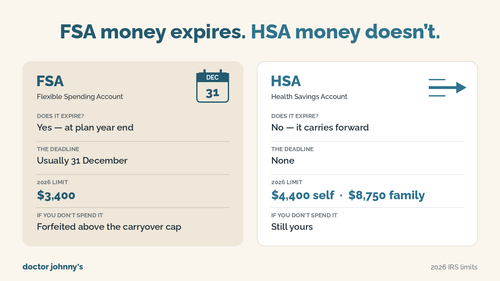
Browse the full compression sock range, with free ground shipping anywhere in the continental US, with no minimum order. And if you have an HSA or FSA, compression socks are HSA/FSA eligible.
Frequently asked questions
Do compression socks help varicose veins?
Many people find compression helps with the symptoms of varicose veins — aching, heaviness and end-of-day swelling. It supports how your legs feel; it doesn't remove the veins.
Can compression socks make varicose veins go away?
No. Compression doesn't repair weakened vein valves or shrink an enlarged vein. Medical treatments exist for that — talk to your doctor or a vein specialist.
What compression level is best for varicose veins?
It depends on your symptoms and your doctor's advice. Many people use 20–30 mmHg day to day; 15–20 mmHg is a comfortable starting point for milder symptoms.
Should I wear compression socks every day for varicose veins?
Many people wear them during the day, putting them on in the morning and taking them off at night. Follow your doctor's advice if you've been given a specific plan.
When are varicose veins a reason to see a doctor?
If a vein bleeds, becomes hot, hard and painful, if one leg swells or hurts, or if the skin around your ankle changes or develops a sore that won't heal. Seek medical care promptly.
This article is for general education and isn't medical advice. It can't tell you whether you have varicose veins or another condition. Compression isn't right for everyone — speak to your doctor if you have peripheral arterial disease, diabetes, neuropathy or any circulation condition. If you have symptoms of a blood clot, seek medical care right away.
Sources
- Kankam H et al. A Summation Analysis of Compliance and Complications of Compression Hosiery — European Journal of Vascular and Endovascular Surgery, 2018.
- Boyers D et al. Automated devices for identifying peripheral arterial disease in people with leg ulceration: an evidence synthesis and cost-effectiveness analysis — Health Technology Assessment (NIHR), 2024.
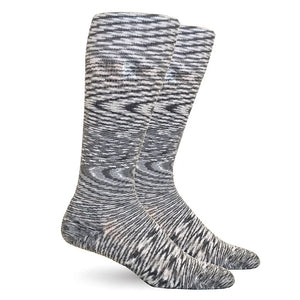
Recommended by Dr. Johnny's
Compression Socks
Surgeon-designed for comfort and healthy circulation — with free shipping on all orders within the continental US.
Shop Compression Socks →About the author
Haylie Segal is co-founder and CMO of Dr. Johnny's. She spends her days talking to the people who actually wear compression — nurses, shift workers, and anyone stuck at a desk — and writes the practical side of leg health: what helps, what to ignore, and when to ask a doctor.
Feet-first, straight to your inbox
Practical foot-health tips from Dr. Segal. No spam — unsubscribe anytime.