


compression
Using Your HSA or FSA for Compression & Diabetic Socks: The Complete Guide
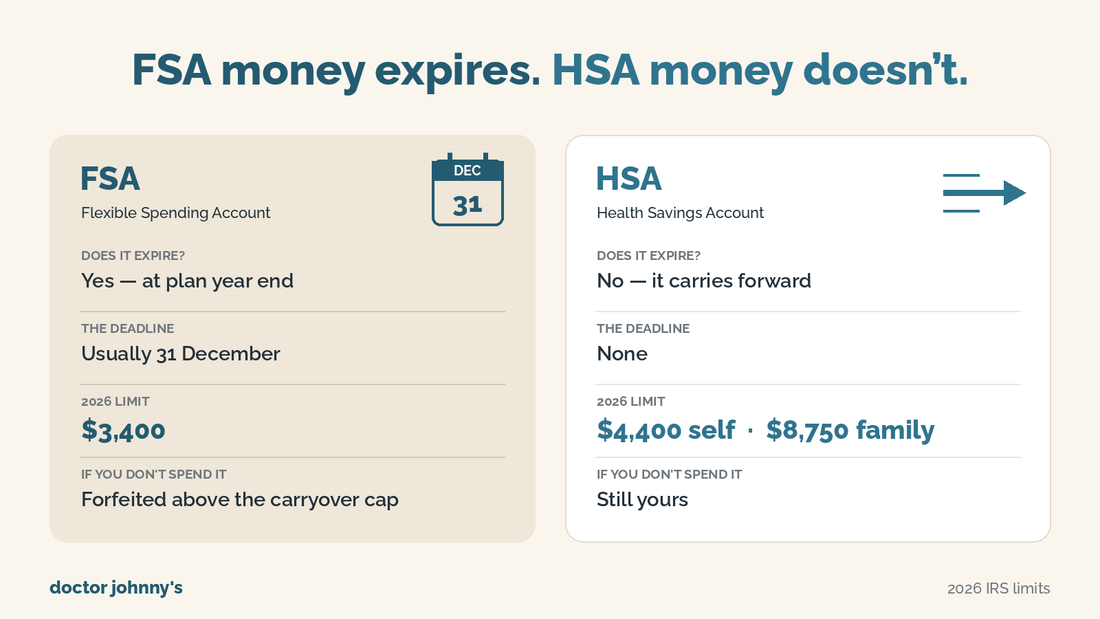
If you have money sitting in a Flexible Spending Account, there is a date on it. If you have money in a Health Savings Account, there isn't. Almost every "HSA/FSA deadline" article online blurs those two together, and the difference is the single most useful thing to understand before you spend anything.
This is the full version of what's on our HSA/FSA page — the rules, the numbers, and the fine print, with sources you can check yourself.
One thing up front: we sell socks, we're not tax advisers. Plans differ enormously, and your own plan documents and administrator beat anything written here.
The short answer
On their own, socks usually aren't a qualified medical expense. With a Letter of Medical Necessity from a licensed provider, compression socks and non-binding diabetic socks can qualify as reimbursable medical expenses.
That's the whole mechanic. Everything below is detail.
The deadline that actually matters
This is where most people lose money, so it's worth being precise.
FSA money expires. HSA money doesn't.
A Health Savings Account carries forward indefinitely. The IRS is explicit that amounts left at the end of the year are generally carried over to the next year.1 There is no December scramble. If you have an HSA, you can buy when you need to, not when the calendar says so.
A Flexible Spending Account is the opposite. FSA money is "use it or lose it" — whatever is left at the end of your plan year is forfeited, unless your plan offers one of two escape hatches.
The two escape hatches — and you only get one
Your employer's plan may offer either a carryover or a grace period. A plan is not permitted to offer both for a health FSA.2
- Carryover. A limited amount rolls into next year. For 2026 plan years the cap is around $660–680 depending on your plan year — the federal employee programme lists $680 carrying into 2027.3 Your plan may set a lower figure, or none at all.
- Grace period. Up to 2½ extra months to incur new expenses — for a calendar-year plan, through 15 March.2
Anything above the carryover cap, or after the grace period, is simply gone. It doesn't come back to you and it isn't refunded.
So the practical advice is dull but valuable: find out which one your plan has, and what your balance is, before December. Your benefits portal or HR team will tell you in about two minutes.
The 2026 numbers
| Health FSA | HSA | |
|---|---|---|
| 2026 contribution limit | $3,4004 | $4,400 self-only · $8,750 family5 |
| Age 55+ catch-up | — | +$1,0005 |
| Does it expire? | Yes — at plan year end | No — carries forward |
| Deadline to contribute | Set by your plan | 15 April 2027 for the 2026 year5 |
The 2026 HSA figures come from IRS draft instructions. They're very unlikely to change, but check the final publication if you're planning to the dollar.
What the IRS actually says about eligibility
Qualified medical expenses are defined by section 213(d) of the tax code: amounts paid for medical care for you, your spouse and your dependents, to the extent they aren't covered by insurance.1
Socks don't appear on any list by name. The category they can fall into is dual-purpose items — things with both an everyday use and a medical one. For those, the IRS wants evidence that the purchase is for a medical reason rather than general comfort. That evidence is the Letter of Medical Necessity.
What a Letter of Medical Necessity is
An LMN is documentation from a licensed provider stating that a product supports a medical need — swelling, circulation problems, diabetic foot care. It's what turns "socks" into "a medical expense" in the eyes of your plan administrator.
It is not a prescription, and you don't need an appointment. At checkout with us, a licensed provider reviews a short health survey and issues the LMN if appropriate — usually within hours.
The savings, honestly
HSA and FSA contributions come out of your pay before tax. So the saving isn't a discount — it's the tax you never paid.
How much that's worth depends entirely on your bracket. Someone in a 22% federal bracket plus state tax and FICA might land near 30%. Someone in a lower bracket will save less. Anyone who quotes you one number for everybody is guessing.
On a $35 pair of 15–20 mmHg compression socks, a ~30% effective rate is roughly $10.50 you don't pay in tax. On a $91 pair of 20–30 mmHg, around $27.
What qualifies from our range
- 15–20 mmHg compression — everyday support for tired, aching or mildly swollen legs. $35.
- 20–30 mmHg compression — firmer support for more noticeable swelling or varicose veins. $91.
- Non-binding diabetic socks — seamless toe, no tight cuff, made for sensitive feet. $15.
All of it is surgeon-designed, and shipping is free by ground anywhere in the continental US with no minimum.
How to buy with HSA/FSA

- Add what you need to your cart and choose Truemed at checkout.
- Answer a short, secure health survey. A licensed provider reviews it and issues your Letter of Medical Necessity if appropriate.
- Pay with your HSA or FSA card — or pay with any card and submit the receipt and LMN to your administrator for reimbursement.
If you're not sure your card will work, the second route is often the smoother one. You get the same tax treatment either way.
Five mistakes worth avoiding
- Assuming your FSA has a grace period. Plenty don't. Check rather than hope.
- Leaving it to 31 December. The LMN step is quick, but it isn't instant, and nor is shipping.
- Throwing away the paperwork. Keep the receipt and the LMN. Administrators ask, sometimes months later.
- Assuming anything marketed as "HSA/FSA eligible" is automatically approved. For dual-purpose items like socks, substantiation is what makes the difference — not the label on the website.
- Treating an HSA like an FSA. If your money doesn't expire, don't rush a decision you'd rather make properly.
Frequently asked questions
Are compression socks FSA eligible?
Usually not on their own, but yes with a Letter of Medical Necessity from a licensed provider. Socks are a dual-purpose item, so plans want evidence the purchase is for a medical reason rather than general comfort.
Do I need a prescription to buy compression socks?
No. Both levels we sell in the US are available over the counter. The Letter of Medical Necessity is about reimbursement, not permission to buy.
When does my FSA money expire?
At the end of your plan year, which for most people is 31 December. Your plan may offer either a carryover of a limited amount or a grace period of up to 2½ months — but not both. Anything above the carryover cap is forfeited.
Does HSA money expire?
No. HSA balances carry forward year to year with no deadline, and the account stays yours if you change jobs.
How much will I actually save?
It depends on your tax bracket, because the saving is the tax you avoid rather than a discount. Many people land near 30% once federal, state and payroll taxes are counted, but it varies.
Can I get reimbursed if I already paid with a normal card?
Yes. Pay with any card, then submit the receipt and the Letter of Medical Necessity to your plan administrator.
What if there isn't enough left in my account?
You can usually reimburse part of the order from your account and cover the rest normally. Your administrator can confirm how your plan handles a partial claim.
This is general information, not tax or medical advice. HSA and FSA rules vary by plan, and eligibility is determined by your plan administrator — check your plan documents. If you have peripheral arterial disease, diabetes or neuropathy, speak to your doctor before starting compression.
Sources
- IRS, Publication 969 — Health Savings Accounts and Other Tax-Favored Health Plans. Qualified medical expenses under section 213(d); HSA balances carried over.
- US Office of Personnel Management, What is the IRS rule on carry over? — carryover and grace period are mutually exclusive; grace period up to 2½ months.
- FSAFEDS, New 2026 Maximum Limit Updates — $680 carryover into 2027 for the federal employee programme.
- IRS, Publication 15-B — Employer's Tax Guide to Fringe Benefits (2026) — $3,400 health FSA salary reduction limit for 2026 plan years.
- IRS, 2026 Instructions for Form 8889 (draft) — 2026 HSA contribution limits, catch-up contribution and contribution deadline.
Recommended by Dr. Johnny's
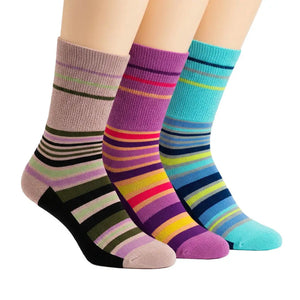
Diabetic Socks
Surgeon-designed for comfort and healthy circulation — with free shipping on all orders within the continental US.
Shop Diabetic Socks →About the author
Haylie Segal is co-founder and CMO of Dr. Johnny's. She spends her days talking to the people who actually wear compression — nurses, shift workers, and anyone stuck at a desk — and writes the practical side of leg health: what helps, what to ignore, and when to ask a doctor.
Feet-first, straight to your inbox
Practical foot-health tips from Dr. Segal. No spam — unsubscribe anytime.


