compression socks
Diabetic Socks vs. Compression Socks: What's the Difference?
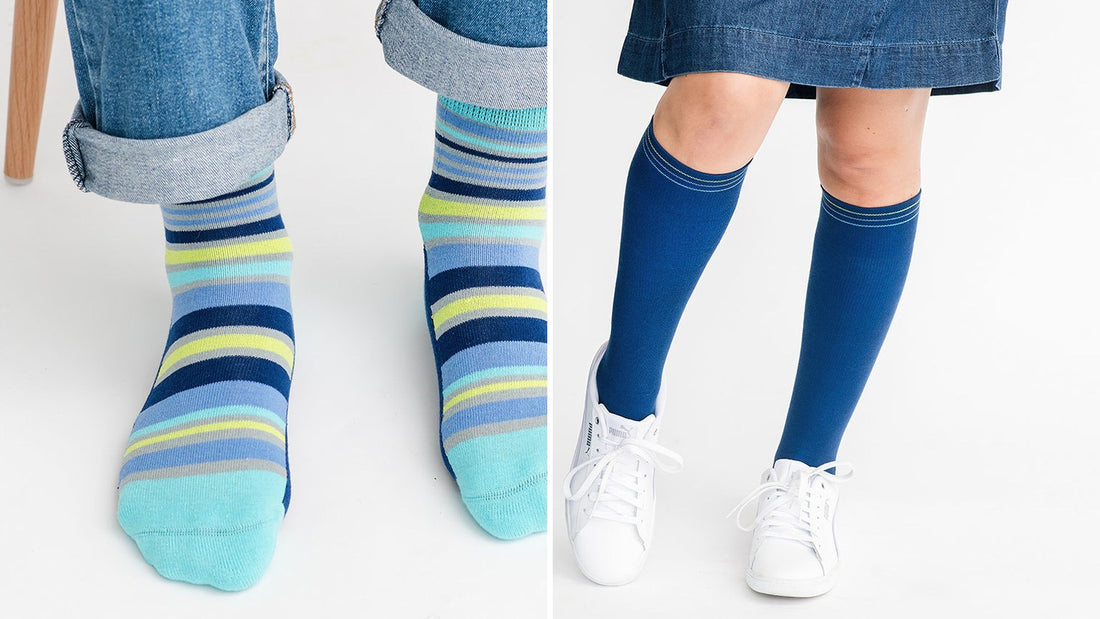
If you've ever stood in front of a shelf holding two packs of socks that both say something about circulation, you've found the thing nobody explains well. Diabetic socks and compression socks are often sold side by side, sometimes by the same brand, and they are built to do nearly opposite things.
Here's the difference, in plain language.
The short answer
Diabetic socks are designed to apply as little pressure as possible. Compression socks are designed to apply a specific, measured amount.
That's the whole distinction. Everything else follows from it.
A diabetic sock has a non-binding top band — it's engineered not to squeeze. A compression sock is engineered to squeeze, firmly at the ankle and less as it moves up the leg, in an amount measured in mmHg.
They're not competing products. They're answers to different questions.
What is a diabetic sock?
A diabetic sock is built around one idea: nothing on this sock should dig in, rub, or leave a mark.
Ours are made with:
- A non-binding top band — a loose, comfortable fit that leaves no marks
- A seamless, flat-felled toe — no ridge across the toes to rub
- A cushioned footbed
- Moisture-wicking cotton blend fabric, breathable and soft
- An antimicrobial silver-ion wash for odor and stain protection
Notice what isn't on that list: compression. Our diabetic socks apply no graduated pressure at all. They are a comfort-and-protection sock, which is exactly what makes them suitable for feet that are sensitive, or that don't report discomfort reliably.
They're also not only for people with diabetes. Anyone whose socks leave marks, whose toes object to a seam, or who wants a sock that doesn't grip the calf will get the same thing out of them.
What is a compression sock?
A compression sock does the opposite on purpose. It applies graduated compression — firmest at the ankle, easing as it goes up the calf — to support the blood's return trip up your legs. That's the whole mechanism: your legs are working against gravity all day, and compression gives that upward journey a hand.
The amount of squeeze is measured in mmHg (millimeters of mercury), and it's the number that matters most when choosing a pair:
- 15–20 mmHg — our everyday level. Travel, long days on your feet, desk-bound days, exercise, pregnancy. This is where most people start.
- 20–30 mmHg — clinic-level support, for noticeably swollen legs, varicose veins, and recovery. If you've been given a compression level by a clinician, this is usually the one they mean.
Our compression socks are surgeon-designed — Dr. Johnny's grew out of a vein clinic, where Dr. Jean Segal spent 35 years treating venous disease and watching patients refuse to wear compression that looked and felt medical.
More on the levels in our compression guide.
So what does mmHg actually mean?
mmHg stands for millimeters of mercury — the same unit a blood pressure cuff uses. On a compression sock, it describes how much pressure the fabric applies at the ankle.
A range like 15–20 mmHg means the sock applies between 15 and 20 mmHg of pressure at the ankle, easing as it travels up. Higher numbers mean a firmer sock, not a better one. The right level depends on what you're dealing with, which is a question for you and your doctor, not a sock label.
Can a sock be both diabetic and compression?
This is the search people actually type, so here's the straight answer: our diabetic socks are not compression socks. Non-binding and graduated compression are opposite design goals, and a sock can't do both at once.
Some people with diabetes do wear compression, and some don't — it depends entirely on their circulation and their own medical picture. That's a conversation to have with your doctor, not a decision to make from a product page. If your doctor has told you a compression level, buy that level. If they've told you to avoid compression, our diabetic socks are built for exactly that.
What we won't do is tell you which camp you're in.
Which one do I need?
| If you're dealing with… | Start here |
|---|---|
| Socks that leave marks, sensitive skin, toes irritated by seams | Diabetic socks |
| Feet that need protection and no pressure | Diabetic socks |
| Tired, aching legs at the end of the day | 15–20 mmHg |
| Long flights, long drives, long shifts | 15–20 mmHg |
| Noticeable swelling, varicose veins, recovery | 20–30 mmHg |
| A compression level your clinician gave you | Buy the level they named |
One thing worth saying plainly: a lighter compression sock is not a stand-in for a level you've been told to wear. 15–20 mmHg sits alongside a prescribed 20–30 mmHg, never instead of it.
How to tell them apart in your own drawer
If you've already got both and lost the packaging:
- Check the top band. A diabetic sock's cuff is soft and loose and doesn't grip. A compression sock's is firm and stays put.
- Look for a number. Compression socks are labeled with an mmHg range. Diabetic socks aren't, because there's nothing to measure.
- Feel the toe. Diabetic socks have a flat, seamless toe you can barely find with a fingertip.
- Put it on. Compression is noticeably firm at the ankle and eases up the calf. A diabetic sock feels like a comfortable sock, which is the point.
Have an HSA or FSA? Compression and diabetic socks can qualify — it takes about two minutes at checkout. Here's how it works.
When should you seek medical care?
A sock is never the answer to a new symptom. See your doctor or go to your nearest emergency department if you notice a sore, blister or cut on your foot that isn't healing, new numbness or tingling, sudden swelling in one leg, or a leg that is red, warm or painful. These can be signs of conditions that need prompt assessment — it's always better to be checked.
Frequently asked questions
What is the difference between diabetic socks and compression socks?
Diabetic socks are non-binding — designed to apply as little pressure as possible, with a loose top band and a seamless toe. Compression socks are designed to apply a measured amount of graduated pressure, firmest at the ankle, described in mmHg. They're built for opposite purposes.
Are diabetic socks compression socks?
No. Dr. Johnny's diabetic socks apply no graduated compression. A sock can't be non-binding and compressive at the same time.
Can people with diabetes wear compression socks?
Some do and some don't — it depends on your circulation and your own medical picture. That's a question for your doctor. If you've been given a compression level, buy that level.
What does mmHg mean on compression socks?
mmHg is millimeters of mercury, the same unit used for blood pressure. On a compression sock it describes the pressure applied at the ankle. A range like 15–20 mmHg means 15 to 20 mmHg at the ankle, easing as it goes up the leg.
Questions about your own circulation, swelling, or which compression level is right for you belong with your doctor. We can tell you what our socks are; we can't tell you what your legs need.
Recommended by Dr. Johnny's
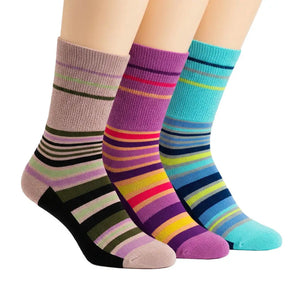
Diabetic Socks
Surgeon-designed for comfort and healthy circulation — with free shipping on all orders within the continental US.
Shop Diabetic Socks →Feet-first, straight to your inbox
Practical foot-health tips from Dr. Segal. No spam — unsubscribe anytime.