


Compression Socks
Compression Socks for Flying & Travel: Long Flights and Road Trips
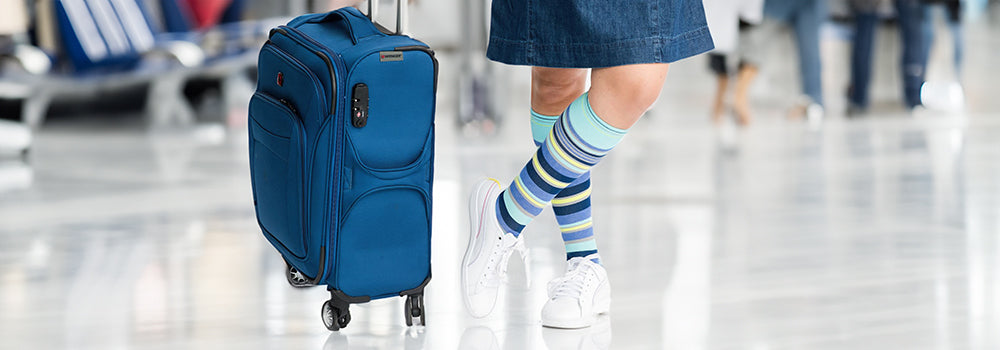
You know the feeling. Six hours into a flight, or four hours into a drive with one more to go, your shoes feel a size smaller and your legs feel like they're full of sand. It isn't in your head — and it's one of the easiest travel problems to get ahead of.
Why do your feet and legs swell when you travel?
Your legs rely on movement to get blood back up to your heart. Every time you take a step, your calf muscle squeezes the veins inside it and pushes blood upward, and small one-way valves stop it sliding back down.
Sit still for hours — knees bent, feet on the floor, very little walking — and that calf pump mostly switches off. Gravity wins a little, and fluid gathers in your ankles and feet. That's why the swelling shows up at the end of a long trip and usually settles after a day or so of moving around normally.
It doesn't matter whether the seat is on a plane, a train, a bus or behind a steering wheel. The common factor is hours of sitting without much movement.
Do compression socks help on a long flight or drive?
Compression socks apply measured, graduated pressure — firmest at the ankle and easing up the calf. That pressure supports your veins and works alongside your calf muscle, helping keep fluid from pooling while you're stuck in a seat.
Most travelers notice it as:
- Less end-of-trip ankle swelling — shoes that still fit when you land
- Less heaviness and ache in the calves
- Legs that feel more "normal" on day one of the trip, instead of day two
The key is that it's measured pressure doing the work. A sock that just feels snug isn't compression — it's a tight sock. Our founder, a surgeon, explains the mechanics in how compression socks actually work.
Can compression socks help prevent blood clots when flying?
Long-haul travel is a recognized risk factor for deep vein thrombosis (DVT) — a blood clot in a deep vein, usually in the leg. Compression stockings are commonly recommended for travelers, but whether compression is right for your clot risk is a question for your doctor, not for a sock company.
Talk to your doctor before you fly if you've had a blood clot before, are pregnant or recently gave birth, have had recent surgery, take hormone therapy, or have a condition that affects your circulation. They can tell you whether compression is a good idea for you and what level to use.
What are the best compression socks for flying?
For most healthy travelers, the choice is between two levels:
- 15–20 mmHg — light, everyday compression. The easy place to start for flights, road trips and long days of sightseeing. Comfortable for hours, simple to pull on in a cramped seat.
- 20–30 mmHg — moderate compression. A good fit if your legs already swell at the end of a normal day, you're on a very long-haul flight, or your doctor has suggested a firmer level.
Higher isn't automatically better. The best travel compression is the level you'll actually keep on from check-in to arrival. For the full comparison, see our compression guide, or browse our picks in best compression socks for travel.
How should compression socks fit for travel?
Fit matters more on a travel day than any other, because you'll be sitting with your knees bent for hours.
- The top band should sit about two finger widths below the crease at the back of your knee. Too high and it digs in every time you bend your knee.
- Measure your calf at its widest point (and your ankle) to pick your size, rather than going by shoe size alone.
- Smooth out any wrinkles — a bunched fold acts like a band.
If socks have ever felt too tight on a long sit, the fix is usually position, not pressure — see your compression socks aren't too tight, you're wearing them too high.
When should I put them on — and when can I take them off?
Put them on in the morning, before you leave home — before any swelling has started. It's far easier than wrestling them on in an airplane seat or at a rest stop. Keep them on for the whole journey and take them off once you're settled and moving normally at the other end.
What else helps legs on a long trip?
- Move every hour or so. Walk the aisle, or stop the car and stretch.
- Do seated calf pumps — lift your heels, then your toes, ten times over — to wake up the calf muscle.
- Drink water through the trip.
- Avoid crossing your legs for long stretches.
- Wear loose, comfortable clothing and shoes you can slip off.
Road trips: same problem, same fix
Driving is the same story as flying — hours in a seat, knees bent, calves barely working — with the added catch that the driver can't get up and walk the aisle. Wear your compression socks for the drive, and plan a stop to stretch your legs every hour or two.
Holiday travel: Thanksgiving and the busiest travel days of the year
Thanksgiving week and the December holidays bring some of the busiest travel days of the year — which usually means longer drives, airport lines, delays and more time sitting still than you planned. A few things help:
- Plan for the delay, not the schedule. Put your compression socks on in the morning before you leave, not at the gate. An extra hour on the tarmac or in holiday traffic is exactly when they earn their keep.
- Build stops into long holiday drives. Traffic means more sitting and less moving. Plan a stretch break every hour or two, and swap drivers if you can.
- Go easy on salt and drink water. Holiday meals tend to be salty, and a salty meal can make your body hold onto extra water for a day or so.
- Put your feet up when you arrive. After a day of travel, cooking and standing in the kitchen, 15 to 20 minutes with your feet above heart level helps end-of-day swelling settle.
- Order before the rush. Shipping gets busier through November, so get a pair in a week or two before you travel — for you, or for the family member who always complains about their legs on the drive.
When should you seek medical care?
Some travel swelling is normal. Some isn't. See your medical provider or go to your nearest emergency room if you notice:
- Swelling, pain, warmth or redness in one leg — especially the calf
- Sudden shortness of breath, chest pain or coughing up blood
- Swelling that doesn't settle after a day or two of normal movement
These can be signs of conditions such as a blood clot, which need prompt assessment. It is always better to be checked.
Before you use compression: compression isn't suitable for people with peripheral arterial disease (reduced blood flow to the legs), because it can affect the arterial blood supply.1 If you have diabetes or neuropathy, check with your doctor too.
Packing list: the leg-friendly travel kit
- One pair of compression socks to wear, one spare for the return
- A refillable water bottle
- Slip-on shoes
- A reminder on your phone to move every hour
Every pair is surgeon-designed, with free ground shipping anywhere in the continental US, with no minimum order — so it's easy to get a pair in before your next trip. And if you have an HSA or FSA, compression socks may be HSA/FSA eligible depending on your plan — worth checking if you have FSA funds to use before your plan year ends.
Frequently asked questions
Should I wear compression socks on a plane?
Many travelers find they help with swelling and tired legs on longer flights. If you have a history of blood clots or a circulation condition, ask your doctor whether compression is right for you before you fly.
What mmHg is best for flying?
For most healthy travelers, 15–20 mmHg is a comfortable starting point. 20–30 mmHg suits people whose legs already swell easily or who are on very long flights. Your doctor can advise if you have a medical condition.
When should I put on compression socks for a flight?
In the morning before you leave, before swelling begins. Keep them on for the whole journey.
Why do my feet swell on long flights?
Hours of sitting with your knees bent and little walking means your calf muscle — which normally pumps blood back up your legs — barely works, so fluid settles in your ankles and feet. It usually settles after a day of normal movement.
Can I sleep in compression socks on an overnight flight?
Many people keep light compression on for an overnight flight, but if they feel uncomfortable, take them off. See can you sleep in compression socks? for more.
Do compression socks help on road trips too?
Yes — the cause of swelling is the same: hours of sitting with little movement. Wear them for the drive and stop to stretch every hour or two.
Should I wear compression socks for Thanksgiving travel?
If you're facing a long flight or drive, many travelers find light 15–20 mmHg compression helps with swelling and tired legs, especially when holiday delays add extra hours of sitting. Put them on before you leave, and check with your doctor first if you have a circulation condition or a history of blood clots.
This article is general education and isn't medical advice. Compression isn't right for everyone — speak to your doctor if you have a medical condition, a history of blood clots, peripheral arterial disease, diabetes or neuropathy. If you have symptoms of a blood clot, seek medical care right away.
Sources
- Boyers D et al. Automated devices for identifying peripheral arterial disease in people with leg ulceration: an evidence synthesis and cost-effectiveness analysis — Health Technology Assessment (NIHR), 2024.
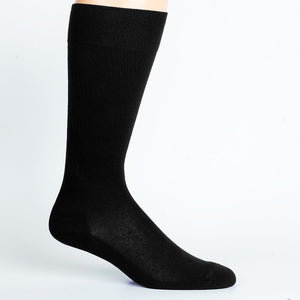
Recommended by Dr. Johnny's
Travel Socks
Surgeon-designed for comfort and healthy circulation — with free shipping on all orders within the continental US.
Shop Travel Socks →About the author
Haylie Segal is co-founder and CMO of Dr. Johnny's. She spends her days talking to the people who actually wear compression — nurses, shift workers, and anyone stuck at a desk — and writes the practical side of leg health: what helps, what to ignore, and when to ask a doctor.
Feet-first, straight to your inbox
Practical foot-health tips from Dr. Segal. No spam — unsubscribe anytime.


